Saturday, August 29, 2015

Siivouspäivä & ramen

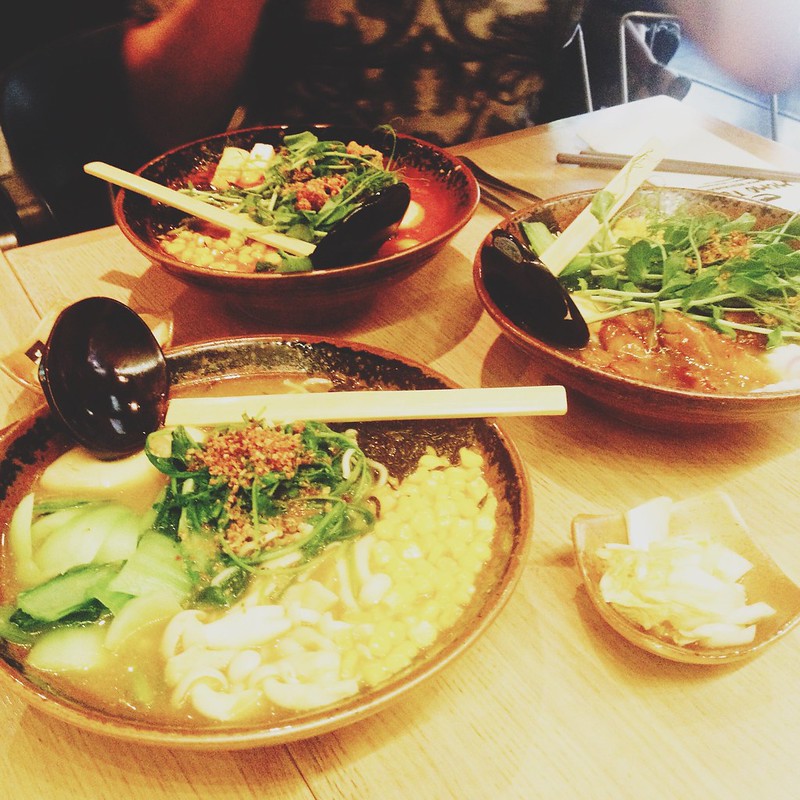
Ramen at Momotoko

Yesterday is siivouspäivä, which means cleaning day. On that day, we can sell our unwanted stuffs outdoor. We went to Vanhakirkkopuisto park, it was fun though I couldn’t sell a lot this time, but I felt relief when someone bought something. Yes guys, I want to be more conscious with my next buy. It doesn’t mean to buy expensive thing but thing that I actually love!

Our dinner is ramen at Momotoko restaurant. I ordered miso vegetable because I ate vegetable this week. It is very full but the broth is too mild. My friends ordered Tantanmen and Shoyu, they said it’s better. 

Thursday, July 30, 2015

Ramen

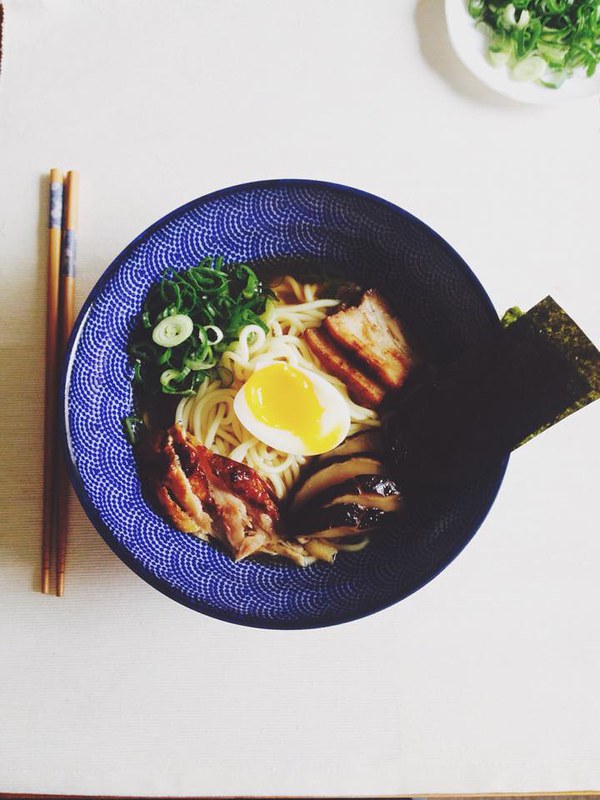
ramen 1
  My ramen's toppings: soft boiled eggs, shiitakes, chashu, scallion, nori and roasted chicken.

In Japan, the noodle that rules all others is ramen and undoubtedly it is one of the most popular dishes over there. Though it varies region by region, basically it includes meat or fish based broth, flavored with soy sauce or miso, and toppings are chashu (Japanese braised pork), nori (dried seaweed), kamaboko (cured surimi) & green onion.

·         Yokahama: where the first ramen shop appeared in Japan, the soup is fatty and salty
·         Hakodate: the broth is pork and chicken based
·         Sapporo: it’s miso based topped with sweetcorn
·         Kitakata: the noodle are flat

Momofuku ramen is closely to Tokyo style which has a touch of dashi (kombu & katsuobushi), and the toppings are scallion, menma (fermented bamboo shoots), sliced pork, kamaboko, egg, nori & spinach.

Recipe adapted from momofuku ramen

Ingredients

Ramen broth (I made the broth a half of the original recipe)
22 g kombu
2,5 l water
21 g dried shiitakes
1 kg pork bones
1 carrot
2 scallion roots and whites

Tare
1, 3 kg chicken (3 chicken legs: cut into thigh pieces & drumsticks)
140 g bacon
1/2 cup sake
1/2 cup mirin
1 cup soy sauce

Directions

Make the ramen broth
1.     In a large stockpot, heat the water to 70°C. Turn off the heat and steep the kombu in it for 1 hour.
2.     Roast pork bones until mahogany color in the oven at 200°C about 30- 45 minutes.
3.     Peel carrot and mirepoix.
4.     Soak dried shiitakes mushroom in hot water about 15 minutes. Wash briefly in cold water, and squeeze the exceeded water. I don’t know why but it is the way my mother and Vietnamese friends deal with the dried shiitakes before properly cook them.
5.     Remove and discard the kombu and add roasted pork bones. Bring to a gentle simmer and skim off the impurities that rise to the top during the first 15 minutes of simmering. Add the shiitakes, carrot, scallion roots and whites. Adjust the heat so the broth simmers gently for 3- 4 hours.
6.     Skim, strain the broth and chill. In case you want to reduce the finished broth, add water when in use.

 Make the tare
1.     Place the chicken in a baking dish; apply a light brush of oil on the skin. Roast in a low oven first at 125°C, so it renders out some fat to cook in then crank it up to 200°C after a couple of minutes. It’s ready when the chicken reaches the mahogany color. It takes about 40-50 minutes.
2.     Remove the chicken from the baking dish. Deglaze the dish with the sake. Scrape the baking dish to “release the fond”. Return the chicken to the saucepan, set it over a medium-hot stove, and add the remaining ingredients.
3.     Lower the heat to the barest of simmers. Keep it there for 1, 5 hour. The idea is infusion, not reduction.
4.     Strain the meat and bones out of the tare and discard them; (keep chicken & bacon if you like)
5.     Chill

To serve
In a separate saucepan, heat the broth and add some water; season with salt & tare to taste. Serve with alkaline noodles, sliced pork and soft boiled eggs.


Thursday, July 23, 2015

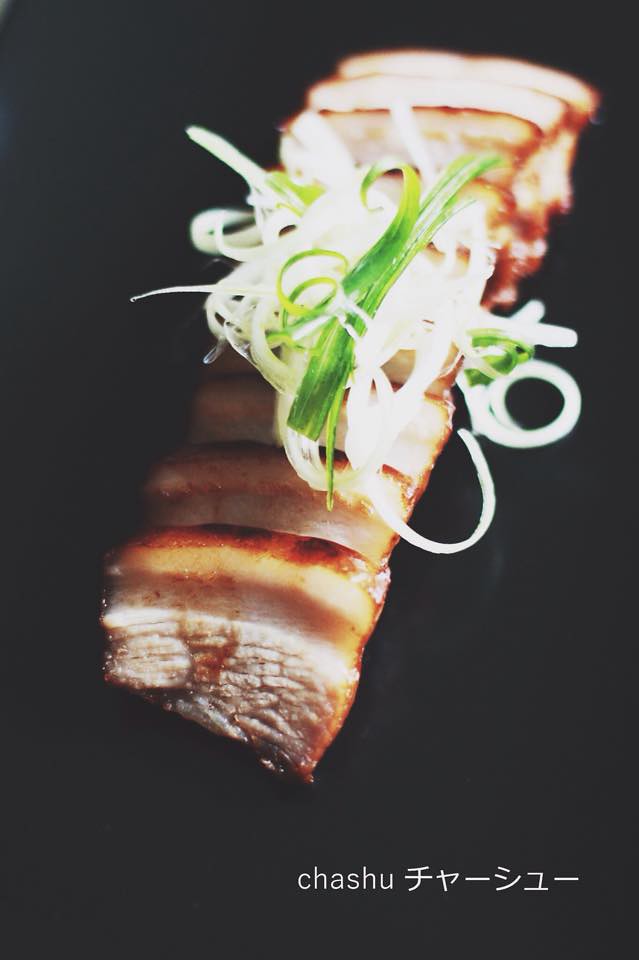
Chashu - Japanese braised pork

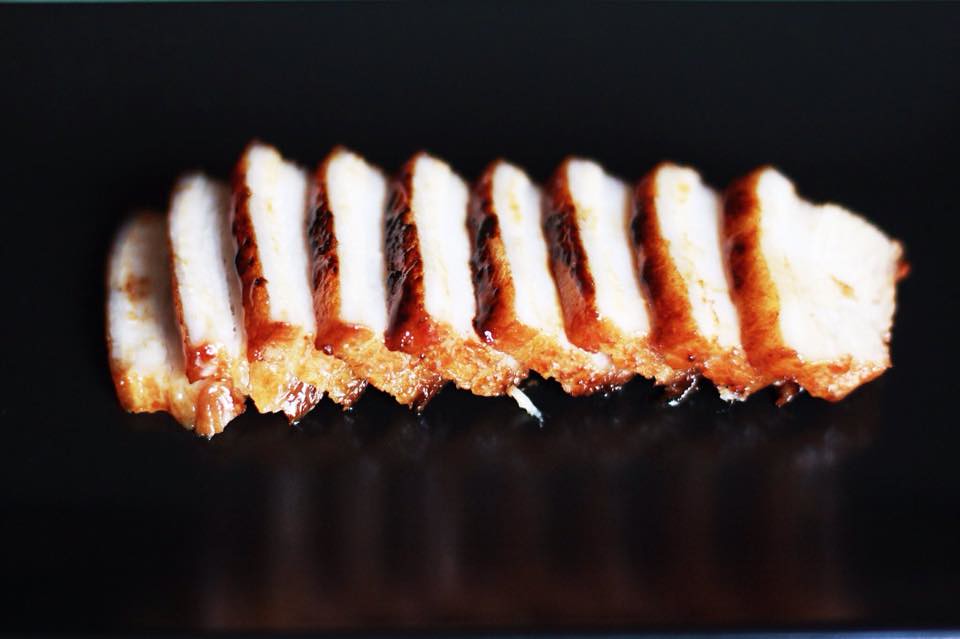
Chashu

The side effect of watching Chang’s cooking episodes is that whenever I saw or tasted something delicious I thought ” this is insane” & then laughed at myself. I like him, like his sense of humor. He is so real and honest.

When I look at the picture of Momofuku ramen, I’m so into Chashu that I searched for the recipe how to make it. Luckily, I found it on Just one cook book, where she gave the step by step instructions.

It tastes like Vietnamese style caramel pork but sweeter due to sake and mirin. The sweet and salt combination is so umami with ginger infused. The ingredients I used is a bit different, I don’t know what to do with the left-over of Ajitsuke tamago’s marinade from yesterday so I add some sake, salt, and ginger to use for Chashu.

Chashu

Recipe is inspired and adapted from the original one justonecookbook

Ingredients

544 g pork belly
1 tsp salt
1 bulb of spring onion
1 tbsp oil

For the sauce
1/3 cup soy sauce
3/4 cup water
1/3 cup sake
1 tbsp mirin
1/2 tbsp brown sugar + 2 tbsps white sugar
1 tsp salt
6 slices of ginger

Directions

1.     Cut spring onion into 2 inch lengths and separate the green parts and white parts. Slice all the white parts and a few green parts thinly. (slicing a few green parts is optional, Shiraga Negi indicates only the sliced white part of spring onion, but I would like to keep a few green pieces to make it colorful).
2.     Soak in cold water for 10 minutes and drain well. Put it in an air-tight container or cover with plastic wrap. We will use this for garnishing later. 
3.     The rest of the green parts will be used later on for cooking.
4.     Peel and slice ginger.
5.     Clean and dry pork belly with kitchen paper. Sprinkle and rub the salt on the pork belly.
6.     Heat the oil in a frying pan over high heat and brown the fat side first, then flip over to brown the other side. It’ll take about 10 minutes.
7.     While browning, put all the ingredients for seasonings in a pot.
8.     Place the pork belly in the pot and add ginger and spring onion and bring it to a boil.
9.     Place a lid on top of the pot, but only cover about 8/10 part of it.
10.  Lower the heat to medium low and simmer, occasionally turning, for about one hour or until there is ¼ inch liquid left in the pot.
11.  Remove the lid and reduce the sauce until you can see the bottom of the pot when you scrape the sauce. Stay in the kitchen as the meat can easily get burnt if there is no liquid left. After 15-20 minutes or so, bubbles start to appear. You are getting close to the end. Turn off the heat when you see the bottom of the pot when you slide the meat around. The sauce is now thickened and meat is shiny.
12.  Take out the meat and cut into thin slices.
13.  Transfer to a serving plate and top with Shiraga Negi.
      
      If you don’t use the chashu right away, pack the chashu and the sauce in an air-tight plastic bag to give it more flavors all around. You can store it in the refrigerator up to 5 days and 3 weeks in the freezer.


Related Posts Plugin for WordPress, Blogger...